
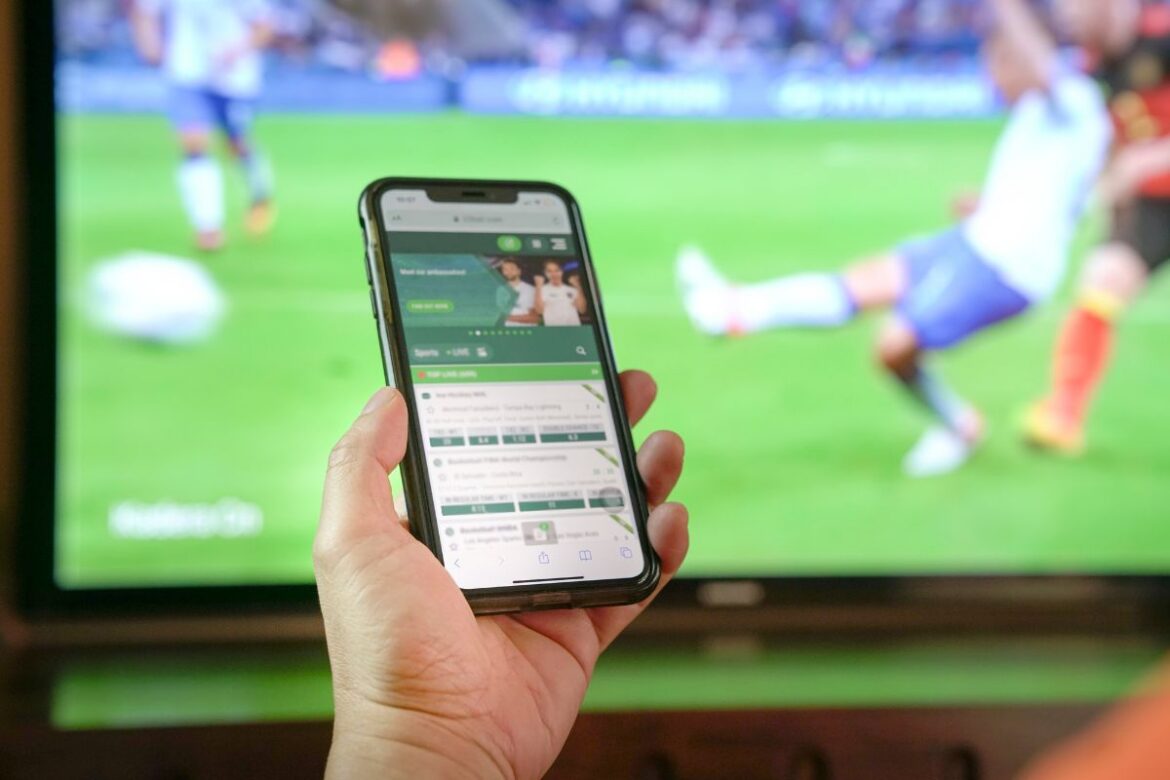
Something has changed in the last several years, and most people haven’t fully registered it yet. Gambling used to require going somewhere — a casino, a track, a back room. It had friction built into it. Now it lives in your pocket, available every second of every day, wrapped in the language of sports fandom and, increasingly, the language of investing.
For a lot of young men, that shift has been quietly devastating. The bets start small and social. They become constant. The losses compound, the debt grows, the shame sets in — and because gambling leaves no slurred speech and no track marks, almost nobody around them knows until things have gotten very bad.
If you’re reading this because you’re worried about your own betting, or because you’re watching a son, a brother, a husband, or a friend disappear into it, this post is for you. At Courageous Counseling & Consulting in Stone Oak, gambling addiction counseling in San Antonio is part of how we address the broader category of compulsive digital behavior — and it’s treatable. People recover from this. That’s worth saying up front.
If you or someone you know is in crisis right now, call or text 988 to reach the Suicide and Crisis Lifeline, available 24/7. For gambling-specific help, the National Problem Gambling Helpline is available at 1-800-522-4700.
Why This Is Hitting Young Men Specifically
The demographic pattern here isn’t subtle. Young men aged roughly 18 to 35 are at substantially elevated risk for gambling problems compared to older adults and to women. Research indicates that young men aged 18 to 25 face disproportionately increased risk for gambling problems compared with both their older and female counterparts, and that men gravitate more strongly toward skill-based gambling formats — sports betting, poker, anything that feels like it rewards knowledge rather than luck.
That “feels like skill” quality matters enormously. A slot machine is obviously chance. A parlay on three games you’ve watched all season feels like analysis. It feels like you’re good at something. That illusion of control is one of the most reliable predictors of escalation, because losing doesn’t read as bad luck — it reads as a correctable mistake. So you correct it. And then you correct that.
Layer on the marketing. Young men are the explicit target of nearly every sportsbook advertising dollar spent in this country, and the messaging is relentlessly normalizing: everyone’s doing it, it makes the game more fun, it’s what being a fan looks like now. The National Council on Problem Gambling has found that the rate of gambling problems among sports bettors runs at least twice as high as among gamblers generally, and that when sports gambling moves online, the rates climb higher still — with one study finding that 16% of online sports gamblers met clinical criteria for gambling disorder.
The Phone Changes Everything
The single most important thing to understand about modern gambling addiction is the delivery mechanism. Every previous form of this problem had natural stopping points built in — the casino closed, you ran out of cash, you had to physically leave. Those weren’t small protections. They were the friction that gave people a chance to stop.
Betting apps removed all of it. The book is open at 3 a.m. Funding is instant. There’s always another game somewhere in the world, and if there isn’t, there are in-game microbets on the next pitch, the next possession, the next play. The gap between impulse and action has been engineered down to nearly zero, which is precisely the design condition under which compulsive behavior takes hold fastest.
This is the same mechanism we see across other forms of digital dependence — variable, unpredictable rewards delivered through a device that’s always within arm’s reach. The brain’s reward system doesn’t respond to consistent payoffs nearly as strongly as it responds to unpredictable ones. That’s not a character weakness. It’s how reward learning works in every human brain, and app design has gotten extraordinarily good at exploiting it. We’ve written more about the broader pattern in the hidden link between digital dependence and anxiety.
Prediction Markets and the Rebranding of Risk
The newest wrinkle is platforms like Kalshi and Polymarket, which let users buy contracts on the outcome of real-world events — elections, economic data, and increasingly, sports. Because these are regulated as financial derivatives rather than as gambling, they arrive wearing entirely different clothes. You’re not betting. You’re trading. You don’t have an account with a sportsbook; you have a position in a market.
For a young man who has absorbed the message that gambling is a vice but investing is responsible, that reframing can dissolve the last bit of internal resistance. The psychological mechanism is identical — uncertain outcome, money at stake, rapid feedback, the pull to recover a loss — but the label has changed, and labels do a lot of work in how we judge our own behavior.
This is not a fringe concern. Through 2026, major sports leagues and players’ associations have pressed federal regulators for tighter safeguards around sports event contracts, arguing they carry the same integrity and welfare risks as conventional sports betting without comparable protections. Regulators and the industry are still working out where the lines sit. In the meantime, the products are live, and the people using them are largely young and male.
Why Gambling Addiction Stays Hidden So Long
Here is the part that makes gambling different from almost every other addiction, and it’s the reason families are so often blindsided.
With alcohol or substance use, the deterioration is visible. Someone slurs their words, misses work, looks different, smells different. The people around them find out, usually well before rock bottom, and that discovery is often what starts the path toward help.
Gambling has no such tell. A person can be tens of thousands of dollars into debt while showing up on time, performing well, and appearing completely fine. The collapse is entirely financial and entirely internal, which means it can proceed almost to the end before anyone notices. And because the shame attached to money problems runs so deep — particularly for young men who have absorbed the idea that providing and self-sufficiency define their worth — the instinct is to hide it and fix it alone. Usually by gambling more.
That combination — invisible harm, deep shame, and a “solution” that makes it worse — is why this problem escalates so quietly and so far.
What the Research Says About Gambling and Suicide Risk
This needs to be handled carefully and accurately, because it’s the part most likely to be either sensationalized or ignored.
At the individual level, the association between problem gambling and suicidality is well documented. A study of young adults in Great Britain published in The Lancet found that among men who had attempted suicide in the past year, 37% had scores indicating problem gambling, compared with 3.6% of men who had not — an adjusted odds ratio of 9.0. A separate longitudinal study of young adults found that worsening gambling severity over time predicted subsequent suicide attempts even after controlling for wellbeing, anxiety, impulsivity, loneliness, and prior attempts.
It’s worth being straight about the whole picture: a 2026 population-level study examining states that legalized online sports gambling found no discernible effect on adult suicide rates at the population level. Individual risk and population-level effects are different questions, and researchers are still working out how they fit together.
What that means practically is this. Problem gambling is a serious risk factor for the individual experiencing it, and it deserves to be taken seriously by that person and the people around them. It is also treatable, and treatment works. The research consistently identifies debt and the resulting sense of being a burden to others as central to why gambling harm escalates toward crisis — which means that intervening on the isolation and the shame, not just the betting, is where recovery actually happens.
Signs That Betting Has Become a Problem
Gambling disorder exists on a spectrum, and most people who develop it don’t recognize the shift while it’s happening. Some of the more reliable indicators:
- Chasing losses. Betting more, or more often, specifically to recover money already lost. This is the single most diagnostic behavior.
- Escalating stakes. Amounts that once felt significant no longer produce the same response, so the numbers climb.
- Secrecy. Hiding the extent of betting from a partner, family, or friends — deleting apps before handing over a phone, minimizing losses, lying about amounts.
- Borrowing to bet. Credit cards, loans, payday products, money from friends or family, or betting money designated for bills.
- Preoccupation. Thinking about the next bet constantly, tracking lines throughout the day, unable to watch a game without money on it.
- Failed attempts to stop. Repeatedly deciding to quit or cut back and not being able to follow through.
- Mood tied to outcomes. Irritability, anxiety, or withdrawal that tracks directly with wins and losses.
- Functional decline. Sleep, work, school, or relationships suffering because of time spent betting or stress about money.
If several of these are present, that’s worth taking seriously — not as a verdict, but as information. And it’s worth being careful about self-assessment here; we’ve written about why self-diagnosis can do more harm than good, and gambling is an area where people tend to both minimize and catastrophize.
How Gambling Addiction Counseling in San Antonio Works
Effective treatment for gambling disorder doesn’t start and end with willpower or app blockers, though practical barriers have their place. It works by addressing what the betting is doing for the person — because compulsive behavior almost always serves a function before it becomes a problem.
For a lot of young men, that function is regulation. Betting delivers stimulation, focus, and a sense of agency that may be missing elsewhere. It can be a way to escape depression or numbness, to manage anxiety, to feel competent, or to belong to something. Removing the behavior without understanding what it was doing tends to produce relapse, because the underlying need is still there.
Therapy for gambling problems at Courageous Counseling typically involves working through several layers at once:
- Understanding the specific triggers, patterns, and functions the gambling is serving
- Addressing the shame directly, since shame is what keeps people isolated and isolation is what keeps the cycle running
- Examining the thinking distortions that sustain gambling — the illusion of control, the near-miss effect, the conviction that the next bet corrects the last one
- Building practical structures around money, access, and accountability
- Treating co-occurring conditions, since gambling problems frequently travel alongside anxiety, depression, or unresolved trauma
- Repairing the relationships damaged by secrecy and financial fallout
Our men’s therapy program in San Antonio is built around exactly the dynamic this problem depends on — the assumption that a grown man should handle his own problems quietly. That belief is the engine of the whole thing, and it’s addressable.
If You’re Worried About Someone Else
You may be reading this because of someone you love rather than because of yourself. A few things that tend to help:
Lead with what you’ve noticed rather than an accusation. Expect defensiveness and don’t treat it as a final answer. Avoid paying off gambling debts directly, which tends to remove consequences without changing behavior — though decisions about family finances are genuinely complicated and worth working through with a professional rather than alone. And take care of your own mental health in the process, because living with someone else’s gambling is its own significant stressor.
If the person is resistant to getting help, our post on how to talk to someone about going to therapy covers that conversation in more detail.
Frequently Asked Questions About Gambling Addiction Counseling in San Antonio
Is gambling addiction a real clinical condition?
Yes. Gambling disorder is a recognized diagnosis in the DSM-5 and is classified alongside substance use disorders because it affects the brain’s reward system in comparable ways. It is a treatable condition, not a failure of willpower.
How do I know if my sports betting has become a problem?
The clearest signals are chasing losses, hiding the extent of your betting from people close to you, borrowing money to bet, and repeatedly trying to stop without success. If several of those apply, it’s worth talking to a professional.
Are prediction markets like Kalshi different from sports betting?
They are regulated differently — as financial event contracts rather than as gambling — but the psychological mechanism is very similar. The uncertain outcome, money at stake, and pull to recover losses affect the brain’s reward system in the same way regardless of the regulatory label.
Why is gambling addiction harder to spot than other addictions?
Because it produces no physical signs. Someone can be in severe financial distress while still functioning normally at work and at home, which means the problem often stays hidden until the consequences become unavoidable.
Can gambling addiction be treated successfully?
Yes. Gambling disorder responds well to therapy, particularly approaches that address the underlying function of the behavior alongside the behavior itself. Many people recover fully and rebuild their financial and personal lives.
Does Courageous Counseling offer gambling addiction counseling in San Antonio?
Yes. We work with individuals and families affected by compulsive gambling and other forms of digital dependence throughout San Antonio and the Stone Oak area. Reach out to schedule a free consultation.
This Is More Common Than You Think, and It Is Treatable
If you’ve read this far because something here describes you, the most useful thing to know is that you are not unusual and you are not beyond help. The design of these products is genuinely effective at producing exactly the outcome you’re experiencing. That’s not an excuse, but it is context — and context matters when shame is the thing keeping you stuck.
Courageous Counseling & Consulting serves individuals and families throughout San Antonio and Stone Oak with licensed, confidential care. Request a free consultation today — no pressure, no judgment, just an honest conversation about where you are and what would actually help.
Crisis resources: If you are having thoughts of suicide, call or text 988 for the Suicide and Crisis Lifeline, available 24 hours a day. For gambling-specific support, call the National Problem Gambling Helpline at 1-800-522-4700 or text 800GAM.